Hooded eyes may be one of the most recognisable features in the world, but they are also one of the most misunderstood. In aesthetic surgery, ‘hooding’ refers to a particular condition in which the brow bone has an overhang of skin and soft tissue that extends over the crease of an eye. While in certain cultures these traits may be considered a lineage aesthetic, in others they become a functional and aesthetic burden as the individual matures.
At Moein Surgical Arts, we believe the first step in achieving successful change is understanding your anatomy. In this guide, we hope to cover the most advanced surgical techniques, focusing on the science and particulars of hooded eyelids.
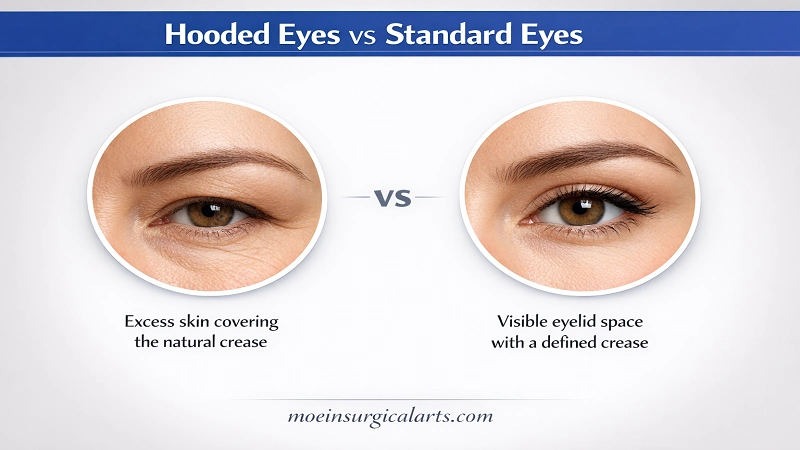
A comprehensive understanding of hooded eyes requires examining the underlying structures. The periorbital region consists of a complex network of muscles, fat pads, and thin skin.
The Genetic Structure
Hooded eyes are often inherited. The prominence of the frontal bone and the attachment of skin to the orbicularis oculi influence their appearance. In these cases, a shorter distance between the eyebrow and lash line causes the skin to fold over the eyelid.
Dermatochalasis: The Aging Factor
In our 30s and 40s, dermatochalasis, or redundant, lax skin, often develops. The skin around the eyes is the thinnest on the body and is the first to lose collagen and elastin. As it loses elasticity, the area can appear heavy and sagging, making the eyes look smaller and tired.
One of the most common misconceptions is that “hooded eyes” and “droopy eyes” are the same. They are not. At Moein Surgical Arts, Dr. Moein uses his extensive clinical expertise to differentiate between these two conditions during every consultation.
While hooded eyes are caused by excess skin (external), Ptosis is caused by muscle weakness (internal). The Levator muscle is responsible for lifting the eyelid. If this muscle stretches or detaches, the entire eyelid sits too low, often covering the pupil and obstructing vision.
| Feature | Hooded Eyes | Ptosis (Droopy Eyelid) |
|---|---|---|
| Primary Cause | Excess skin and brow positioning (Genetic or Aging). | Muscle weakness (Levator muscle) or nerve damage. |
| Visual Indicator | The eyelid crease is hidden by a fold of skin when eyes are open. | The actual edge of the upper eyelid sits too low, regardless of the crease. |
| Impact on Pupil | Usually does not cover the pupil or obstruct vision. | Can partially or fully cover the pupil, obstructing the field of vision. |
| Surgical Solution | Upper Eyelid Surgery (Focuses on skin/fat removal). | Ptosis Repair (Focuses on muscle tightening). |
| Best Candidate | Individuals with heavy brows or excess upper eyelid skin. | Patients with a “tired” look due to low-hanging lid margins. |
The landscape of cosmetic surgery has changed. We are now seeing a surge in hooded eyes due to modern lifestyle factors:
Due to the increased popularity of GLP-1 drugs, there is a significant number of people who experience a rapid loss of fat in their faces. The increased rate of fat loss reduces the fat pads underlying the eyebrow area. This, in turn, leads to a deflated appearance of the eye area. Just as the diagnosis of lipedema as opposed to cellulite poses a challenge, the management of hooded eyes due to Ozempic poses a challenge. In most cases, the management of hooded eyes with Ozempic involves fat grafting in conjunction with skin excision.
Constant screen time leads to “tech-squinting.” This overuses the muscles between the eyebrows, leading to a lowered brow position. When the brow drops, the skin beneath it creates a deeper hood over the eyes.
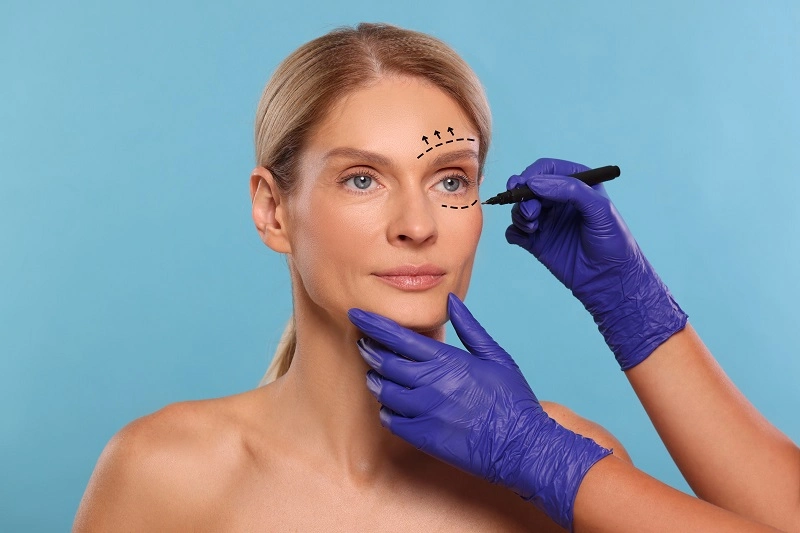
When non-surgical options are no longer effective, eyelid surgery (Blepharoplasty) is the gold standard.
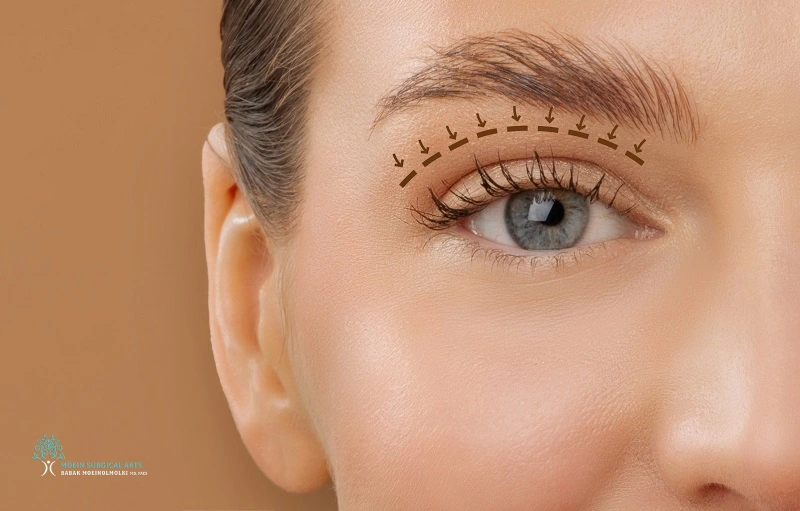
Upper Eyelid Surgery is not just about cutting skin. It is about sculpting the eye to look refreshed without looking “operated on.”
Often, a patient with hooded upper lids will also have significant puffiness or bags below the eyes. Addressing both through Lower Eyelid Surgery ensures a balanced rejuvenation. Dr. Moein’s approach focuses on the “lid-cheek junction,” ensuring there are no harsh lines or transitions.
In about 30% of cases, the “hooding” is actually caused by the descent of the forehead and eyebrows. If we only remove skin from the eyelid, the eyebrows may appear even lower.
Recovery is a major concern for our patients. While the eyes are delicate, they heal remarkably fast.
Explore our collection of post-op guides for more insights, such as our detailed resource on neck lift and lower facelift recovery.
At Moein Surgical Arts in Los Angeles, we recognize that not all hooded eyes are created equal. Depending on your bone structure and skin quality, Dr. Moein may utilize specialized variations of the standard blepharoplasty:
For patients in their 20s and early 30s who are starting to notice hooding, surgery may be premature. Our Med-Spa services offer excellent alternatives:
When considering eyelid surgery, cost is a significant factor. It is important to view this as a long-term investment in your self-confidence and, in some cases, your visual health. The total cost at Moein Surgical Arts is influenced by several factors:
One of the greatest benefits of upper eyelid surgery for hooded eyes is its longevity. Unlike fillers or Botox, which last only months, the results of a blepharoplasty typically last 10 to 15 years, and for many patients, the results are permanent.
While the surgery “sets back the clock,” it doesn’t stop it entirely. To ensure your results remain crisp:
While treatments like Botox and Ultherapy can help, they cannot remove excess skin. If the hooding is significant, Upper Eyelid Surgery is the only permanent solution.
Our goal is never to change the shape of your eyes, but rather to reveal the eye shape you already have that is currently hidden by skin.
Most patients describe the sensation as “tightness” rather than pain. Local anesthesia with sedation ensures you are comfortable throughout the procedure.
Hooded eyes don’t have to shape how others see you. Whether your eyelids are naturally hooded or have changed with age, you can achieve a brighter, more refreshed look with a simple consultation. At Moein Surgical Arts, we focus on natural results that highlight your features without making you look like you’ve had work done.
Dr. Moein wrote this guide. He is a leading cosmetic surgeon known for his artistic approach to facial rejuvenation. With top board certifications, Dr. Moein uses precise techniques and a strong sense of symmetry to give each Los Angeles patient care that fits their unique needs.
If you’re tired of looking worn out or dealing with heavy eyelids, it may be time to talk to a specialist who understands how to treat the eye area with care.
Don’t let hooded eyes cover up your true expression. Reach out to Moein Surgical Arts today and find out why so many people in Los Angeles trust us for eyelid rejuvenation.