
If your buttocks appear flatter, lax, or “deflated” post-Ozempic/Wegovy/Zepbound/Mounjaro (GLP-1) weight loss, know you are not alone.Ozempic Butt involves a loss of volume (fat) and diminished skin elasticity.This leads to creasing, skin sagging, loss of defined contours, and reduced protrusion. While nonsurgical modalities like energy-based skin tightening can offer temporary, slight improvements in the appearance of the buttocks in early or early-moderate cases, for patients with moderate to severe laxity, surgery is usually the most effective means of correction.
Depending on whether the candidate lacks volume, has skin laxity, or both, surgery will be appropriately tailored.
“Lifts, as well as selective fat transfers, are required for those patients who will be receiving Ozempic butt lifts, to provide the patient’s buttock area with the makeover that it needs.”
In Los Angeles, the right strategy usually involves one question:
What is the problem? Primarily “lost volume” or “loose skin”? Both?
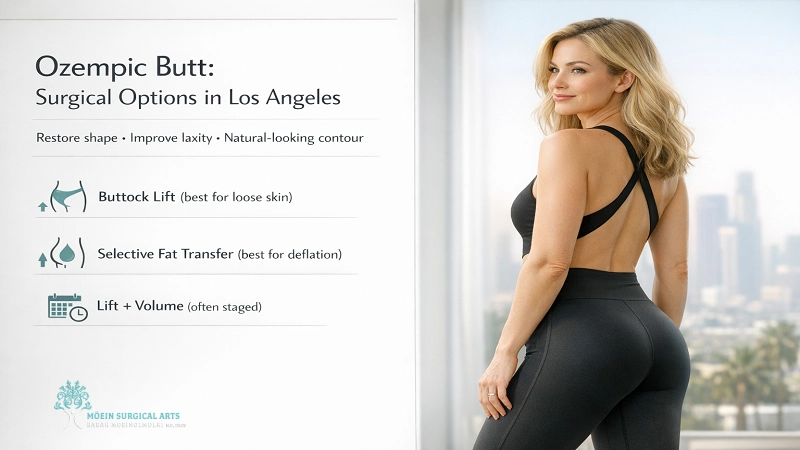
“Ozempic Butt” is not a disease but rather a body contour change that may occur following significant weight loss, most likely in a short period of time.
Common causes include:
Rapid fat loss from the buttocks and hips (genetic fat distribution plays a significant role.
Key point: If the primary concern is skin laxity, skin tightening devices may offer some improvement in skin quality, but they never give the appearance of a lift. Hence, the main role of surgery is in treating such cases.
To better determine what you’re treating when you suspect someone has “Ozempic butt,” it’s essential to assess whether the primary problem is volume loss versus loose skin, and whether you’re treating both. Volume loss results in a flat, non-projected buttock, whereas loose skin causes wrinkles and crepiness. Often, you’ll find that your patients are developing both problems, and this can occur when there’s rapid weight loss from GLP-1 medications.
Quick checklist
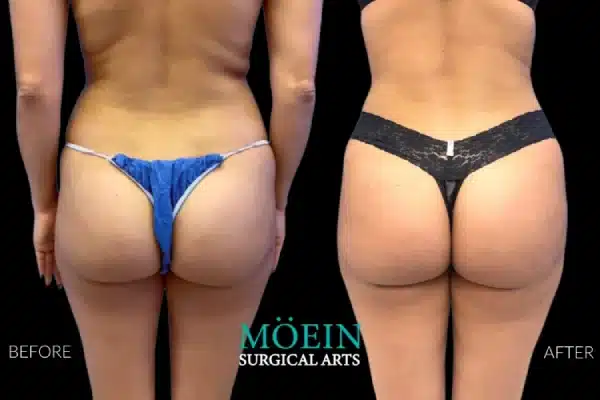
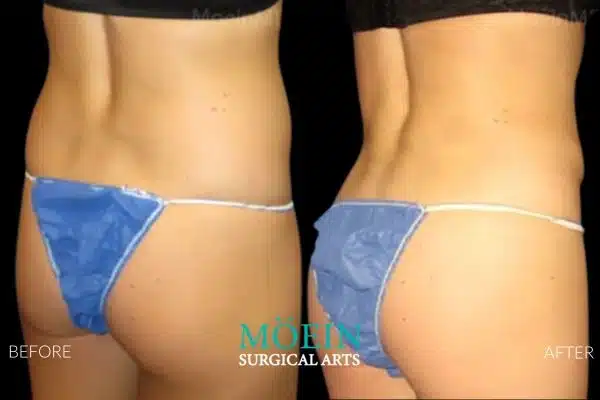
The buttock lift aims to correct sagging and loose skin that may result from rapid weight loss induced by GLP-1. Perhaps your primary issue is sagging, wrinkles, or what is commonly known as “empty skin.” In this case, a buttock lift in Los Angeles will prove most effective since it involves excising excessive skin and repositioning it to give you a tighter look.
It works by:
Best for:
Pros:
Some patients have primarily volume loss without major skin redundancy. In these cases, carefully planned fat transfer can:
Best for:
Pros:
Considerations:
For patients comparing surgical approaches, see BBL vs Butt Lift for a clear explanation of how these procedures differ and when each makes sense.
Often, GLP-1 patients will have both laxity and volume loss. In such a circumstance, the most natural-appearing correction can be achieved by addressing both problems in the correct order rather than attempting to “fill” lax skin with volume.
Common strategy (often the most predictable):
Some patients may be considered for a combination of procedures. Still, grading may be safer and more reliable, especially in the setting of poor skin quality, laxity, or medical/nutritional concerns prompting a conservative strategy. In the context of body changes following significant weight loss, this method can be incorporated into the management of post-weight loss body contouring patients.
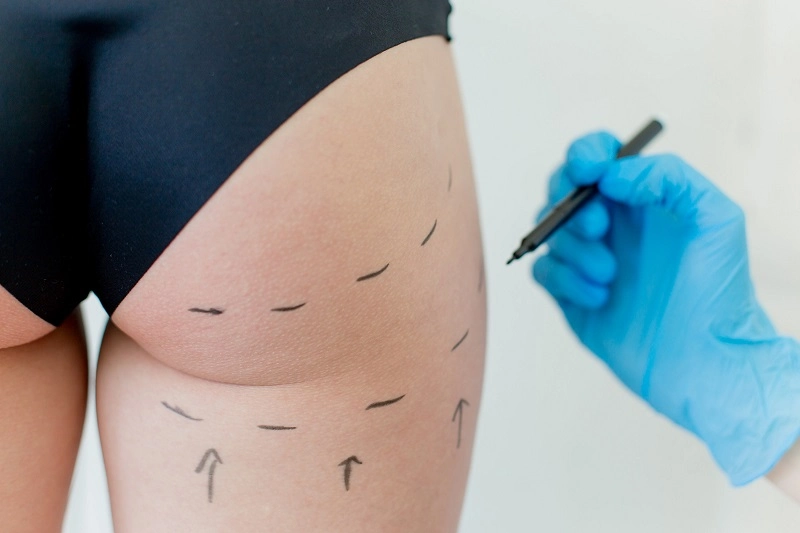
In the situation where the patient presents with laxity around the circumference, meaning loose and hanging skin around the abdominal, gluteal, and lateral thighs, the most extensive surgical approach could be the lower body lift, also sometimes referred to as a belt lipectomy.
This can:
Lift the buttocks and outer thighs
Tighten the lower trunk
Improve global contour after major weight loss
A liposuction does not tighten loose skin, so it is not commonly considered the “main” treatment method of the Ozempic butt either. With the right usage, it may still be considered a helpful adjunct treatment to accentuate the silhouette of the buttocks.
Liposuction may help when:
Patients who are weighing their options may find that body contouring surgery, such as Los Angeles liposuction, can be an excellent complementary treatment when a more defined waistline is desired. To gain a better appreciation of the relative efficacy of liposuction compared to abdominal surgery, view Liposuction vs Tummy Tuck.
| Primary Problem | Best Treatment | What It Fixes Best | Typical Downtime (General) | Notes |
|---|---|---|---|---|
| Mostly Loose Skin Sagging, crepey texture, “empty skin” | Buttock Lift (Excisional Lift) | True lift + removal of excess skin | Moderate | Most predictable option when droop is the main issue; scars depend on technique and anatomy. |
| Mostly Volume Loss Flatness/deflation with decent skin recoil | Conservative Fat Transfer | Projection, roundness, smoother transitions | Moderate | Best when skin quality is good; some resorption is expected; avoid “overfilling” lax skin. |
| Both Skin + Volume Deflation + wrinkles + droop | Lift + Selective Volume Restoration (Often staged) | Addresses laxity and shape together | Moderate | Often highest satisfaction; staging can be safer and more predictable in significant laxity or poor skin quality. |
| Circumferential Laxity Abdomen/flanks/butt/thigh involvement | Lower Body Lift (Belt Lipectomy) | Global tightening + lifting | Higher | Best for major weight loss pattern when laxity extends beyond the buttocks alone. |
| Mild Laxity Only Early looseness, minimal droop | Non-Surgical Tightening | Texture + mild firmness | Low | Can help mild cases; not a true lift and results vary—often requires multiple sessions/maintenance. |
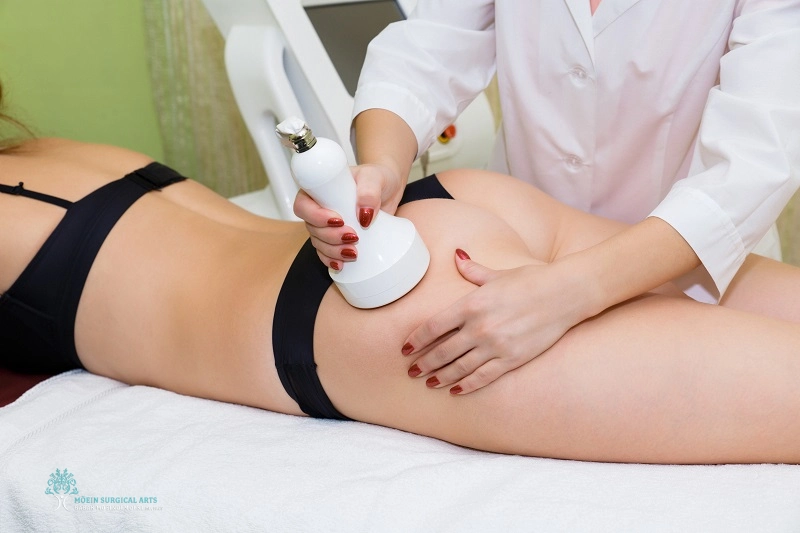
Non-surgical treatments can help mild cases or serve as an adjunct, but patients deserve honest expectations: they do not replace surgical lifting when there is significant excess skin.
These treatments may improve:
They work best when the issue is early laxity, not true “hanging” tissue.
Can help improve:
In some patients, collagen-stimulating injectables may improve texture slightly, but they are not a lifting procedure and should be used carefully.
Strengthening the glute muscles can improve how the buttocks “sit,” but it won’t remove loose skin. It’s best used as support before/after treatment.
In performing an Ozempic butt lift, a proper diagnosis of the condition is first required – skin laxity, volume loss, or a combination of the two. Subsequently, the best approach for maximum aesthetics with minimal risk is selected: a butt lift for skin laxity, selective volume replacement for volume loss, or a combination of the two. A great consult also establishes the procedure timeline based on weight stability, possible staged procedures, and recovery timelines.
As a point of reference for plastic surgery trends, such a briefing is informative. Additionally, for those researching a two-stage approach, knowing liposuction costs in Los Angeles would be enlightening.
Ozempic butt occurs due to the rapid weight loss associated with GLP-1. This can include both fat loss and skin laxity. The weight loss associated with GLP-1 can also affect other areas of the body, including fat loss resulting in vulvar laxity or atrophy (“Ozempic vulva”), in combination with buttock deflation. If the primary problem is skin laxity, surgical lifting would be the most reliable treatment option, as surgery alone can eliminate excess skin and reestablish the contours of the buttocks. If the primary problem involves buttock deflation but the skin appears healthy, fat grafting may be beneficial.
If you are in the Los Angeles area and would like advice on how an experienced cosmetic surgeon can help you, Dr. Moein can discuss your situation and make recommendations. You can call our office at (310) 597-4976 or request a consultation by completing our contact form.