It is the honest worry behind almost every ab etching consultation: will it look obvious? People have seen the bad examples, the too-perfect, too-symmetrical abs that look painted on rather than earned. That fear is reasonable, because ab etching done poorly does look fake. The good news is that a fake look is not inherent to the procedure. It is the result of specific, avoidable mistakes. Understanding what causes the artificial look tells you exactly what to look for in a surgeon.
This article explains why some ab etching looks fake, what a natural result actually depends on, and how to judge it for yourself. The most useful thing you can do is see real ab etching results from the surgeon you are considering, and this guide will help you know what you are looking at.
Why some ab etching looks fake
Almost every unnatural result traces back to one of a few causes:
- Lines that ignore the patient’s real anatomy. When a surgeon carves a generic, textbook six-pack instead of following the patient’s own muscle borders, the definition sits in the wrong places and the eye immediately reads it as artificial.
- Too much definition. Grooves cut too deep look like trenches, not muscle. Real muscle definition is softer at the edges than most people expect.
- Perfect symmetry. Real abdominal muscles are not perfectly even. A result that is flawlessly symmetric looks manufactured, because human bodies are not.
- Ignoring the surrounding areas. Defined abs above untreated, bulky flanks look disconnected. Definition has to be balanced across the whole torso to look believable.
Notice that every one of these is a decision the surgeon makes, not a limitation of the technology. A natural result and a fake one can come from the same tools. The difference is judgment.
What a natural result actually depends on
Marking that follows your body
A natural result starts before any surgery, with marking. With you standing and flexing, the surgeon maps your own midline, your own muscle borders, and your own oblique lines. The etching then follows that map. This is why the same procedure produces a believable result on one patient and an obvious one on another. The surgeon who traces your real anatomy is working with your body. The surgeon who imposes a template is working against it.
Conservative, not maximal, definition
The instinct that more definition equals a better result is exactly backwards. The most natural outcomes come from defining just enough that the abdomen reads as fit, then stopping. Restraint is a skill. It is easier to add a little more at a touch-up than to soften grooves that were cut too aggressively, so a careful surgeon errs toward subtlety.
Precision in the shallow layer
Natural etching lives in the shallow fat layer, roughly 1 to 2 millimeters under the skin, which is delicate work. Tools like Hi-Def VASER liposuction allow controlled work in that layer, but the tool only makes precision possible. The surgeon still has to use it with a light, deliberate hand for the result to look organic. It is also worth knowing the timeline: the etched lines keep softening and settling over the first 6 weeks, and the true, final contour is not visible until 3 to 6 months, once swelling has fully resolved.
Balancing the whole torso
Abs never exist in isolation. A believable result treats the abdomen, flanks, and waist as one connected shape, so the definition flows into a lean torso rather than sitting on top of an untreated one. For many patients that means combining etching with broader contouring so the transitions look natural.
Will it still look real when I move?
A good result holds up in motion. Because the etching follows your real muscle lines, the definition shifts and flexes the way genuine muscle does when you twist, reach, or tense. A poorly planned result, by contrast, looks stiff and static, because the lines do not correspond to anything that actually moves underneath. This is one reason to look at video or multiple angles, not just a single flattering still.
How to judge a surgeon’s results
- Look at 8 to 12 cases, not one. A single great photo can be luck or lighting. A consistent body of work shows a standard.
- Look for variety. Believable results differ from patient to patient, because they follow different bodies. Identical-looking results are a warning sign.
- Look at relaxed photos, not only flexed ones. Definition should look reasonable at rest, not only under maximum tension.
- Ask to see results at 3 to 6 months, when swelling has resolved and the true outcome is visible.
Ab etching does not have to look fake. When the plan follows your anatomy, the definition is conservative, and the whole torso is balanced, the result looks like what it is meant to look like: a fit person who trained hard and finally revealed it.
Frequently asked questions
Does ab etching look fake?
It can when done poorly, usually from carving generic lines that ignore the patient’s anatomy, cutting grooves too deep, or making the result too symmetric. When the etching follows your real muscle borders and stays conservative, the result looks natural.
How do surgeons make ab etching look natural?
By marking your own muscle anatomy while you stand and flex, defining conservatively rather than maximally, working precisely in the shallow fat layer, and balancing the abdomen with the flanks and waist so the whole torso looks connected.
Will ab etching look real when I move?
Yes, when it follows your actual muscle lines. The definition then flexes and shifts with genuine muscle as you move. Results that look stiff in motion usually came from lines that did not follow real anatomy.
Can ab etching be made more subtle?
Yes. The depth and amount of definition are chosen deliberately. Many patients, especially women, request a subtle, athletic look, which is achieved by defining lightly and stopping short of deep grooves.
What is the best way to tell if a surgeon’s results look natural?
Review at least 8 to 12 before-and-after cases rather than one, look for natural variety between patients, check relaxed as well as flexed photos, and ask to see results at 3 to 6 months when the final outcome is visible.
* Illustrative images on this page are models, not actual patients. Real patient results are shown in our Before & After gallery.
]]>Ab etching and a tummy tuck both promise a better-looking midsection, so patients often assume they are two versions of the same thing and ask which is cheaper or faster. They are not versions of the same thing. They solve different problems. Choosing the wrong one is the most common way people end up disappointed with an otherwise well-done surgery, because the operation was excellent but it was never going to fix what actually bothered them.
This guide explains what each procedure does, who each one is for, and how to know which fits your body. If you already know you want muscle definition rather than skin removal, our page on ab etching goes deeper on that specific procedure.
The core difference in one sentence
Ab etching sculpts fat to reveal muscle definition on a firm abdomen. A tummy tuck removes loose skin and repairs stretched or separated muscle. One is about revealing what is underneath. The other is about rebuilding the foundation. If your problem is a stubborn fat layer over good muscle, etching is your procedure. If your problem is hanging skin or a stomach that bulges no matter how much you train, a tummy tuck is.
What ab etching does
Ab etching is high-definition liposuction focused on the abdomen. It works best when the skin is firm and the muscle is developed, and there is simply a layer of fat blurring the definition. It does not tighten loose skin and it does not repair separated muscles. Ask it to do those jobs and it will fail, not because it was done poorly, but because it was the wrong tool.
What a tummy tuck does
A tummy tuck, or abdominoplasty, removes excess skin, tightens the abdominal wall, and repairs diastasis recti, the separation of the abdominal muscles that commonly follows pregnancy or major weight change. It leaves a low scar in exchange for a flat, firm abdomen that diet and exercise cannot achieve on their own. For patients who do not need a full tuck, a mini tummy tuck addresses looseness limited to below the navel.
The one that decides it: diastasis recti and loose skin
Here is the test that settles most cases. If your abdomen bulges outward even when you are lean, or you can feel a gap down the center of your stomach when you tense, you likely have separated muscles. No amount of fat sculpting will flatten that, because the bulge is the abdominal wall itself, not fat. Similarly, if you have loose skin that folds or hangs, etching will remove fat from underneath and can actually make loose skin look worse. Both of those problems are tummy-tuck problems.
Side by side
| Ab etching | Tummy tuck | |
|---|---|---|
| Main goal | Reveal muscle definition | Remove loose skin, repair muscle |
| Best candidate | Firm skin, developed muscle, stubborn fat | Loose skin or separated muscle (diastasis) |
| Addresses loose skin? | No | Yes |
| Repairs muscle separation? | No | Yes |
| Scar | Tiny incision sites | Low horizontal scar |
| Recovery to desk work | About a week | Roughly two weeks |
What about after major weight loss?
Patients who have lost a large amount of weight, whether through surgery or GLP-1 medication, almost always have loose skin as the primary issue. For them, skin removal comes first. Etching for definition, if desired, is a later step once the foundation is set. Our overview of post-weight-loss body contouring explains how skin removal and contouring are sequenced after significant weight loss.
Can you have both?
Yes, and for the right patient it is the ideal answer. A tummy tuck rebuilds the flat, firm foundation, and etching then adds definition to that foundation. This is common for post-pregnancy and post-weight-loss patients who want more than a flat stomach. The two can sometimes be staged and sometimes combined, depending on your anatomy and how much work each area needs. The plan should be built around your body, not around a package.
How to decide
- Pinch and look. Firm skin with a fat layer points to etching. Loose, folding skin points to a tummy tuck.
- Tense your core. A central bulge or gap points to muscle separation, which is a tummy-tuck problem.
- Consider your history. Pregnancy and major weight loss usually mean skin and muscle need attention first.
- Get an honest assessment. A good surgeon will tell you which procedure fits, even when it is not the one you came in asking for.
Frequently asked questions
What is the difference between ab etching and a tummy tuck?
Ab etching sculpts fat to reveal muscle definition on a firm abdomen. A tummy tuck removes loose skin and repairs separated abdominal muscles. Etching reveals; a tummy tuck rebuilds the foundation.
Can ab etching fix loose skin or a belly pooch?
No. Ab etching removes fat but does not tighten loose skin or repair a bulge caused by separated muscles. Those are addressed by a tummy tuck. Etching on loose skin can even make the looseness more noticeable.
How do I know if I have diastasis recti?
If your abdomen bulges outward even when you are lean, or you feel a gap down the center of your stomach when you tense your core, you may have muscle separation. It is confirmed at an in-person exam and is repaired with a tummy tuck, not with etching.
Can I get ab etching and a tummy tuck together?
Often yes. A tummy tuck creates a flat, firm foundation, and etching can then add definition. The two may be combined or staged depending on your anatomy and the amount of work needed.
Which has a longer recovery, ab etching or a tummy tuck?
A tummy tuck has the longer recovery, with most patients returning to desk work in about two weeks, versus about one week for ab etching. Both reach their final result over several months.
* Illustrative images on this page are models, not actual patients. Real patient results are shown in our Before & After gallery.
]]>Ab etching is often shown as a men’s procedure, all blocky six-packs and gym selfies. That framing leaves out a large group of women who train hard, eat carefully, and still cannot get the lean, toned midsection they are working toward. Ab etching absolutely works for women. The difference is not whether it can be done, but how it should be done, because the goal for a female midsection is different from the goal for a male one.
This article explains what ab etching looks like for women, who makes a good candidate, and how a natural, athletic result is achieved rather than an over-defined one. For the full technical picture of the procedure, our main page on female ab etching and body sculpting covers technique and candidacy in depth.
What women usually want, and it is not a bulky six-pack
Most women who ask about ab etching are not looking for the deep, blocky definition seen in male physique competitors. They want a smooth, flat stomach with a soft central line, a hint of the upper abdominal definition, and a narrowed, feminine waist. That is a very achievable and very natural look. The art of female ab etching is restraint: defining just enough to read as fit and toned, without crossing into a masculine or artificial appearance.
How the female approach differs
- Softer midline. The central groove is defined more gently, so the stomach looks lean and athletic rather than carved into rigid blocks.
- Emphasis on the waist. For women, narrowing the flanks and obliques to create a defined waist and a subtle hourglass often matters more than deep abdominal lines.
- Whole-torso balance. A great female result considers the waist, the lower back, and the transition to the hips together, not the abdomen in isolation.
- Conservative definition. Less is more. The aim is a result that looks like the payoff of hard training, not like surgery.
Are you a candidate?
The best candidates for female ab etching are women who are near their goal weight with a thin-to-moderate layer of fat over developed muscle. Etching reveals the tone you already have. It is not a weight-loss procedure and it will not substitute for one. If you carry more fat, have significant loose skin, or have separated abdominal muscles from pregnancy, a different plan may serve you better, and we will say so honestly at consultation.
When a mommy makeover fits better
Pregnancy changes the abdomen in ways that etching alone cannot address. If you have loose skin that does not bounce back or separated abdominal muscles, called diastasis recti, sculpting the fat will not fix the underlying looseness. In those cases, a tummy tuck, often as part of a mommy makeover, repairs the muscle and removes the excess skin. Some women combine skin and muscle repair with etching for definition once the foundation is corrected. The right sequence depends on your anatomy, and honest guidance on that is part of the consultation.
Combining etching with full-torso contouring
Many women get their best result when etching is combined with broader fat removal. Treating the flanks, back, and waist together, sometimes as part of Lipo 360, creates the smooth, narrowed waistline that makes the abdominal definition read well. Sculpting the abdomen without addressing the surrounding areas can look disconnected. The torso is one canvas.
Recovery, briefly
Recovery for women follows the same arc as for men. Most patients return to desk work within a week, wear compression around the clock in the early weeks, resume training around six weeks, and see the final, settled result at three to six months as swelling clears. Compression and patience are the two things that most influence how clean the final contour looks.
What real female results look like
A natural female ab etching result looks like a woman who is genuinely fit: a flat, smooth stomach, a soft central line, a defined waist, and no obvious sign that anything was done. It should be believable in a swimsuit and believable in person. The way to judge a surgeon is to look at their own patients. Our before-and-after gallery is the best place to see the standard we hold for a natural, athletic outcome.
Frequently asked questions
Can women get ab etching?
Yes. Ab etching works well for women. The technique is adjusted to create a softer central line and a defined waist for a natural, athletic look rather than a bulky, masculine six-pack.
Will ab etching make me look too masculine?
Not when it is done conservatively. Female ab etching aims for subtle definition and a narrowed waist. A skilled surgeon defines just enough to look toned, avoiding the deep, blocky lines associated with male results.
Am I a good candidate for female ab etching?
The best candidates are near their goal weight with a thin-to-moderate fat layer over developed muscle, without significant loose skin or muscle separation. Etching reveals the tone you already have; it is not a weight-loss procedure.
Should I get ab etching or a tummy tuck after pregnancy?
If you have loose skin or separated abdominal muscles from pregnancy, a tummy tuck, often within a mommy makeover, addresses those problems that etching cannot. If your skin and muscle are firm and you simply want definition, etching may be enough. A consultation determines the right choice.
Does ab etching narrow the waist?
Yes. For women, treating the flanks and obliques to narrow the waist is often the most impactful part of the result, creating a subtle hourglass shape alongside abdominal definition.
* Illustrative images on this page are models, not actual patients. Real patient results are shown in our Before & After gallery.
]]>If you have researched body contouring in Los Angeles, you have run into a wall of labels: traditional liposuction, laser lipo, VASER, high-definition or HD lipo, and 4D lipo. Each clinic seems to have its own favorite term, and the marketing implies that a bigger number means a better result. It does not work that way. Some of these labels describe genuinely different technology, and some are just names for the same idea dressed up to sound newer.
This article cuts through the terms so you can tell what is real, what is branding, and which approach actually produces defined abs. If your goal specifically is muscle definition, the finishing version of this work is abdominal etching, which we cover separately in depth.
Start with what the words are describing
Two different things get bundled into these labels. The first is the tool used to loosen and remove fat. The second is the technique, meaning how artistically the surgeon shapes what is left behind. A lot of the confusion comes from mixing those two up. A fancy tool in a hurried pair of hands gives an ordinary result. A simple tool in expert hands can give a beautiful one. The technique matters more than the brand name on the machine.
Traditional liposuction
Traditional or suction-assisted liposuction removes fat with a thin cannula and vacuum. It is excellent at what it is designed to do: reduce volume and slim an area. Standard liposuction in Los Angeles is the right choice when the goal is a smoother, slimmer contour rather than visible muscle definition. It works in the deeper fat layer and is not aimed at carving detail near the skin.
VASER and the “HD” idea
VASER uses ultrasonic energy to break up fat before it is removed. That precision is what makes it possible to work safely in the shallow layer just under the skin, which is exactly where muscle definition is created. When a surgeon uses that shallow-layer control to define the midline and muscle borders, the result is called high-definition liposuction, or HD lipo. So HD lipo is not a separate machine. It is VASER-assisted liposuction used with a definition-focused technique. Our HD lipo and Hi-Def VASER liposuction pages explain the tool and the approach in more detail.
So what is “4D” lipo?
This is the part that surprises people. “4D” is mostly a marketing extension of high-definition lipo. The idea behind the name is that the sculpting accounts for how muscles look in motion, not just at rest, so the definition still reads naturally when you move, flex, or twist. That is a real and worthwhile goal. But it is not a fourth dimension of surgery or a different machine. A skilled HD surgeon is already thinking about how the result looks in motion. In practice, “4D lipo” and “high-definition lipo” describe the same category of work. Do not choose a surgeon because of the number in front of the word “D.” Choose based on their results and their judgment.
The labels side by side
| Label | What it actually is | Best for |
|---|---|---|
| Traditional liposuction | Suction removal of fat in the deep layer | Slimming and volume reduction, not definition |
| VASER liposuction | Ultrasonic energy loosens fat for precise removal | Precise removal, including the shallow layer |
| HD / high-definition lipo | VASER used with a technique that defines muscle borders | Visible athletic definition, six-pack look |
| 4D lipo | A marketing term for HD lipo emphasizing definition in motion | The same goal as HD lipo |
| Ab etching | HD lipo focused specifically on the abdominal midline and muscle lines | A defined, sculpted six-pack |
Which one gives you defined abs?
Defined abs come from work in the shallow layer that follows your actual muscle anatomy. That means high-definition technique, whether a clinic markets it as HD or 4D, applied specifically to the abdomen as ab etching. Traditional liposuction alone will slim your stomach but will not carve a six-pack, because it is not designed to work in the layer where definition lives. If a defined midline is your goal, the term to focus on is the technique and the surgeon’s track record, not the branded name.
The questions that actually matter
- Can the surgeon show me their own before-and-after photos of the exact result I want?
- Do they work in the shallow layer safely, and how many of these cases do they do?
- Is the plan built around my anatomy, or a one-size template?
- Is the facility accredited and is the anesthesia provider board-certified?
Notice that none of those questions are about whether the machine is called 3D, 4D, or anything else. The technology has to be capable, but past that point, the outcome is decided by the hands using it.
Frequently asked questions
What is the difference between HD lipo and 4D lipo?
They describe the same category of work. HD, or high-definition, lipo uses VASER to sculpt muscle definition in the shallow fat layer. “4D lipo” is a marketing term for the same approach, emphasizing that the definition looks natural in motion. There is no separate 4D machine.
Is VASER better than traditional liposuction?
Neither is universally better. VASER’s ultrasonic precision allows safe work in the shallow layer, which is needed for muscle definition. Traditional liposuction is well suited to slimming and volume reduction. The right choice depends on your goal.
Does 4D lipo actually create a six-pack?
The high-definition technique it refers to can create a defined six-pack, but only through skilled shallow-layer sculpting that follows your muscle anatomy. The result comes from the surgeon’s technique, not the label.
Which type of liposuction is best for ab definition?
High-definition liposuction applied specifically to the abdomen, known as ab etching, is the approach designed for visible muscle definition. Traditional liposuction slims the area but does not carve definition.
Is more expensive lipo always better?
No. Price and marketing labels do not guarantee a better result. The strongest predictors of a good outcome are the surgeon’s technique, experience with definition work, and their documented results.
* Illustrative images on this page are models, not actual patients. Real patient results are shown in our Before & After gallery.
]]>The question I hear most often about ab etching is not about the surgery itself. It is about the weeks afterward. How much time off do I really need? When can I train again? When will I actually see the six-pack I paid for? Recovery is where expectations and reality most often drift apart, so it is worth walking through honestly, week by week.
Recovery from ab etching is not dramatic, but it is not nothing. It follows a predictable arc: a few quiet days, a return to normal life within a week or so, and then a slower stretch where swelling settles and the definition sharpens. Understanding that arc ahead of time makes the whole experience easier. If you are still deciding whether the operation is right for you, our full guide to the ab etching procedure covers candidacy and technique.
Why recovery works the way it does
Ab etching is performed with high-definition liposuction, usually using Hi-Def VASER liposuction, which uses ultrasonic energy to loosen fat precisely in the shallow layer where definition lives. Because the work is close to the skin, the body responds with swelling and fluid, and the skin needs time and help to shrink down onto the newly etched contour. Almost everything you do in recovery, especially wearing compression, is aimed at controlling that swelling and guiding the skin to adhere in the right places.
Ab etching recovery, week by week
| Time after surgery | What to expect |
|---|---|
| Days 1 to 3 | Rest with the compression garment and foam in place. Soreness, tightness, and some fluid drainage are normal and expected. Short, gentle walks around the house help circulation. This is the low point, and it passes quickly. |
| Days 5 to 7 | Most patients with desk jobs return to work. Compression is worn around the clock. You will feel stiff and swollen, but daily activity is comfortable enough to resume. |
| Weeks 2 to 3 | Light cardio and normal daily movement resume as cleared. Bruising fades and the sharpest soreness is behind you. The midsection still looks swollen, which is normal and temporary. |
| Weeks 4 to 6 | Compression steps down. Core exercise and full training resume gradually, usually around the six-week mark. The shape starts to look like the goal, though deep swelling is still resolving. |
| 3 to 6 months | Final definition emerges as the last of the deep swelling clears and the etched lines settle into place. This is when the result you were promised actually shows. |
Days 1 to 3: the quiet part
Plan to do very little for the first three days. You will have a compression garment on, often with foam pads underneath to spread pressure evenly and prevent lumps. Expect to feel sore, tight, and tired. Some pinkish fluid drainage from the small incision sites is completely normal in the first day or two. The most useful things you can do are drink water, walk gently around the house a few times a day, and rest. Arrange for someone to help at home for at least the first day.
Days 5 to 7: back to normal life
Most patients with a desk-based job are back at work within a week. You are not fully healed, but you are functional. The garment stays on around the clock, because this early compression is doing real work to control swelling and shape the result. Avoid anything that raises your heart rate hard or strains the core.
Weeks 2 to 6: the rebuild
This is the stretch where patience matters. You will feel good enough to want to push, but the tissue is still settling. Light cardio comes back first, then, around six weeks, core work and heavier training. If your plan included skin tightening with Renuvion, the skin continues to retract over these weeks, which is part of why the contour keeps improving well after you feel recovered.
Months 3 to 6: the real result
Here is the honest truth about timing: you will see a clear difference once compression ends, but the crisp, final definition takes three to six months to fully arrive. Deep swelling is slow to leave, and the etched grooves only look their sharpest once it is gone. Patients who understand this from the start are far happier, because they are not judging a three-week result and assuming that is the finish line.
How to make recovery go smoothly
- Wear the compression garment exactly as instructed. It is the single most important thing you control.
- Walk early and often, but do not push into real exercise before you are cleared.
- Stay hydrated and eat enough protein to support healing.
- Keep every follow-up visit so the contour can be checked and lymphatic massage started if recommended.
- Do not weigh the result before three months. Swelling will lie to you.
Frequently asked questions
How long does ab etching recovery take?
Most patients return to desk work in five to seven days and to full training around six weeks. The final, sharpest definition appears at three to six months once deep swelling fully resolves.
When can I work out after ab etching?
Light cardio usually resumes at two to three weeks as cleared, and core and heavier training around six weeks. Returning too early risks more swelling and a slower result.
How long do I wear the compression garment?
Compression is typically worn around the clock for the first several weeks, then stepped down over weeks four to six. Following the schedule closely is the biggest factor you control in the quality of your result.
When will I see my six-pack after ab etching?
You will notice a difference once compression ends, but the etched lines sharpen as swelling clears. Expect a clear result by six to eight weeks and the final definition at three to six months.
Is ab etching recovery painful?
Most patients describe soreness and tightness rather than sharp pain, worst in the first three days and manageable with the prescribed medication. By the end of the first week, daily activity is comfortable.
* Illustrative images on this page are models, not actual patients. Real patient results are shown in our Before & After gallery.
]]>Ab etching is one of the most searched cosmetic prices in Los Angeles, and it is also one of the most confusing. Type “ab etching cost” into Google and you will see numbers that swing from a few thousand dollars to twenty thousand, often on the same page. That spread is not because surgeons disagree about the value of the work. It is because most of those figures are measuring different things, and some of them are leaving out the parts that cost the most.
This guide explains what ab etching actually costs when the quote is honest and complete, what goes into that number, and how to read a price so you are comparing like with like. If you want the full picture of the procedure itself, our main page on abdominal etching in Los Angeles covers technique, candidacy, and recovery in depth.
What ab etching is, in one paragraph
Ab etching is high-definition liposuction used as sculpture. Instead of simply removing a layer of fat, the surgeon works in the shallow layer just under the skin to define the midline and the natural borders of the abdominal muscles, so a defined, athletic look is revealed. Because the work is detailed and slow, it takes more time and more skill than standard debulking liposuction. That difference in effort is the single biggest driver of the price.
What ab etching actually costs in Los Angeles
At Moein Surgical Arts, abdominal etching starts at $10,000, all-inclusive. All-inclusive is the important word. That figure is not a surgeon’s fee with the real costs hidden underneath. It covers the whole episode of care, from the pre-operative workup to the last follow-up visit.
| What the all-inclusive price covers |
|---|
| Surgeon’s fee for high-definition etching |
| Accredited surgery-center facility fee |
| Board-certified anesthesia |
| Pre-operative evaluation and lab work |
| Compression garments |
| All post-operative follow-up visits and scar management |
A more involved plan costs more. Etching the abdomen alone sits near the starting price. Adding the flanks, obliques, and serratus for a full high-definition torso, or combining etching with skin tightening, moves the number up from there. A combined torso plan commonly lands in the region of $12,000 to $18,000 depending on how many areas are treated. Your exact quote is set in consultation, once the plan matches your body rather than an average.
Why the numbers you see online are misleading
Many of the low figures quoted online, often in the $3,000 to $7,000 range, are surgeon-fee-only averages pulled from national data. Those numbers deliberately exclude the operating room, the anesthesiologist, the garments, and the follow-up care, because those costs vary by city and facility. In Los Angeles, at an accredited surgical center with a board-certified anesthesia provider, those excluded items are real and they are not small.
When a quote looks dramatically cheaper than everyone else, the honest question is what has been left out. Sometimes it is the facility accreditation. Sometimes it is the anesthesia provider’s qualifications. Sometimes the follow-up care and revision policy are billed separately later. A single all-inclusive number is easier to trust because there is nothing hiding behind it.
What changes your price
- How many areas are etched. Abdomen alone is the lower end. A full high-definition result across the abdomen, obliques, flanks, and serratus is more work and more time.
- Whether skin needs tightening. If your skin elasticity is reduced, adding a tightening step such as Renuvion helps the skin conform to the new contour and adds to the scope.
- Combined procedures. Many patients pair etching with broader fat removal. Our pages on HD lipo and full-torso contouring explain how these combine in a single session, which shares facility and anesthesia costs.
- Operative time and anesthesia. High-definition work is meticulous. Longer, more detailed cases carry higher facility and anesthesia costs than a quick debulking case.
Financing and how patients pay
Most patients do not pay for body contouring out of one account. Financing through medical lenders spreads the cost into monthly payments, and many patients combine a deposit with a payment plan. Our overview of fees and costs for cosmetic surgery walks through the payment options and what to prepare before your consultation. Because ab etching is an elective aesthetic procedure, it is not covered by insurance.
Is ab etching worth what it costs?
Ab etching is not a weight-loss procedure and it is not a shortcut. It is a finishing procedure for people who already train and eat well but cannot reveal the definition underneath a stubborn layer of fat. For the right candidate, the result is durable, since the fat cells removed do not come back, and it can be the difference between a flat midsection and a genuinely athletic one. The cost reflects the fact that the outcome depends almost entirely on the surgeon’s judgment and hand, not on a device setting.
Frequently asked questions
How much does ab etching cost in Los Angeles?
At Moein Surgical Arts, abdominal etching starts at $10,000, all-inclusive, meaning the surgeon’s fee, accredited facility, anesthesia, garments, and all follow-up care are included. A full-torso or combined plan typically ranges higher, often $12,000 to $18,000, depending on the areas treated.
Why is ab etching more expensive than regular liposuction?
Standard liposuction removes a layer of fat to slim an area. Ab etching sculpts the shallow layer to reveal muscle definition, which is slower, more detailed, and more dependent on the surgeon’s artistry. The added operative time and skill are what raise the price.
Does insurance cover ab etching?
No. Ab etching is an elective cosmetic procedure, so it is not covered by health insurance. Financing and payment plans are available.
Can I pay for ab etching in monthly installments?
Yes. Medical financing lets you spread the cost into monthly payments. Many patients combine a deposit with a payment plan arranged before surgery.
Why are some ab etching prices online so much lower?
Low figures are often surgeon-fee-only national averages that exclude the operating room, anesthesia, garments, and follow-up care. An all-inclusive Los Angeles price includes all of those, so it is not comparable to a fee-only number.
* Illustrative images on this page are models, not actual patients. Real patient results are shown in our Before & After gallery.
]]>Diastasis Recti may sound like a complex medical term, but in simple words, it means your abdominal muscles have separated. These are the same muscles that form the “six-pack”, the rectus abdominis. Usually, they’re held together by a strong band of tissue called the linea alba. But sometimes, that band stretches and pulls apart, leaving a visible bulge or gap in your belly.
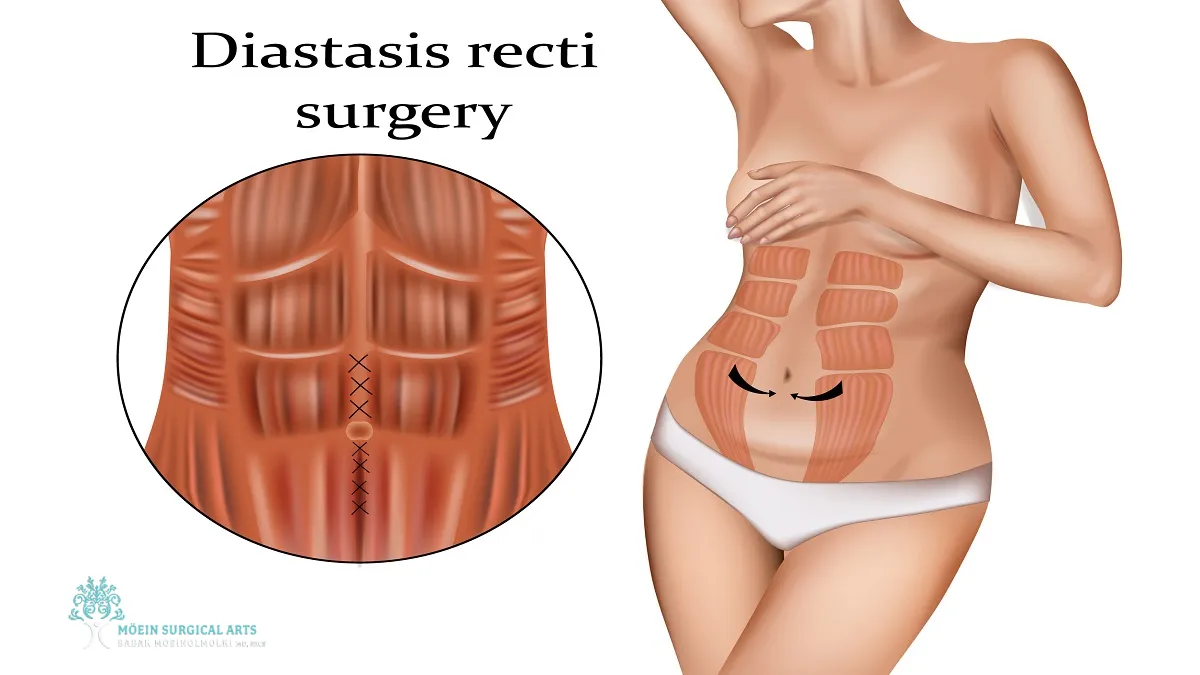
Table of Contents
Definition & Causes of Diastasis Recti
Diastasis Recti is a separation of the abdominal muscles along the midline. It’s not a tear, but a thinning and widening of the connective tissue. This condition is especially common in:
- Women during and after pregnancy
- Men who’ve gained significant abdominal weight
- People who lift weights improperly
- Anyone with chronic coughing or abdominal pressure
- Older adults, as collagen weakens with age
Think of it like this:
Your core is a soda can. When the pressure inside gets too high, the sides bulge. Diastasis is similar to a bulge; it’s the result of excessive internal pressure pushing out on weak spots.
Symptoms That Impact Daily Life
Here’s what many people experience:
- A visible bulge or dome shape in the middle of the belly, especially when getting up
- Lower back pain due to poor core support
- Weak abdominal muscles and core instability
- Poor posture
- Trouble lifting or carrying heavy objects
- Occasional bloating or a “pregnant” look, even when you’re not pregnant
Real-life example:
“I had my last child 4 years ago, but I still looked 4 months pregnant. I didn’t know it was a real medical issue until my doctor checked my core. It turned out to be diastasis recti.”
Ignoring it can lead to:
- Chronic back pain
- Pelvic floor dysfunction
- Poor balance and coordination
- Increased risk of hernias
At Moein Surgical Arts, we take this condition seriously. Because your core is your body’s center of strength. If it’s compromised, everything else suffers from mobility to mood.
How to Self-Check at Home For Diastasis Recti
So, you’re noticing a weird bulge in your belly, or maybe your core just feels… off. You’re thinking, “Could this be Diastasis Recti?” Good instinct! Early diagnosis can make a world of difference.
Step-by-step self-check:
- Lie on your back with knees bent and feet flat.
- Place your fingers just above your belly button.
- Lift your head and shoulders slightly (like starting a crunch).
- Feel the midline of your abdomen with your fingertips.
If you feel a gap or soft spot between the muscles, that could be diastasis recti. You might also feel your fingers sink into your belly more than usual. If you can fit two or more fingers in that gap, it’s worth looking into further.
Tests & Imaging for Confirmation
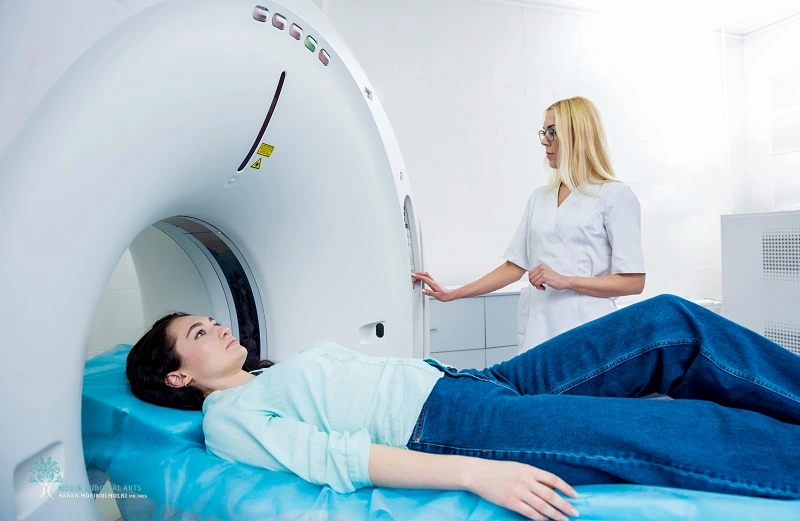
During your consultation, a physical exam usually reveals a lot. But to get precise measurements or check for related issues like hernias, imaging may be needed.
Common tools include:
- Ultrasound: Measures the gap and tissue thickness
- CT scan: Gives a detailed view of muscle positioning
- MRI: Rare, but used in complex or combined abdominal cases
When to See a Specialist:
If your self-check shows a gap, or if you’re dealing with these issues:
- Persistent core weakness
- Belly “pooch” that won’t go away
- Lower back pain
- Bulging when sitting up or lifting things
- Poor posture or balance issues
…it’s time to consult a specialist.
Surgical Options for Diastasis Recti
So, you’ve done the workouts. You’ve worn the binder. You’ve been to physical therapy. And yet… the bulge in your belly just won’t go away. At this point, you’re not lazy, you’re just dealing with a structural problem that requires a structural fix.
This is where surgery comes in.
Mini Tummy Tuck
A mini tummy tuck is ideal for patients with:
- A small abdominal separation
- Minimal excess skin
- No significant hernias
This procedure focuses on the lower abdominal area (below the belly button). Dr. Moein makes a small, discreet incision and tightens the abdominal wall using internal sutures.
Benefits of a mini tummy tuck:
- Smaller incision
- Quicker recovery time
- Natural-looking results
- Often done under local anesthesia with sedation
Limitations:
- Doesn’t address upper abdominal separation
- Not suitable if there’s a lot of loose skin
Think of this as the “light version” of abdominal surgery, great for moms or athletes with mild to moderate diastasis who still want cosmetic improvement.
Full Tummy Tuck (Abdominoplasty)
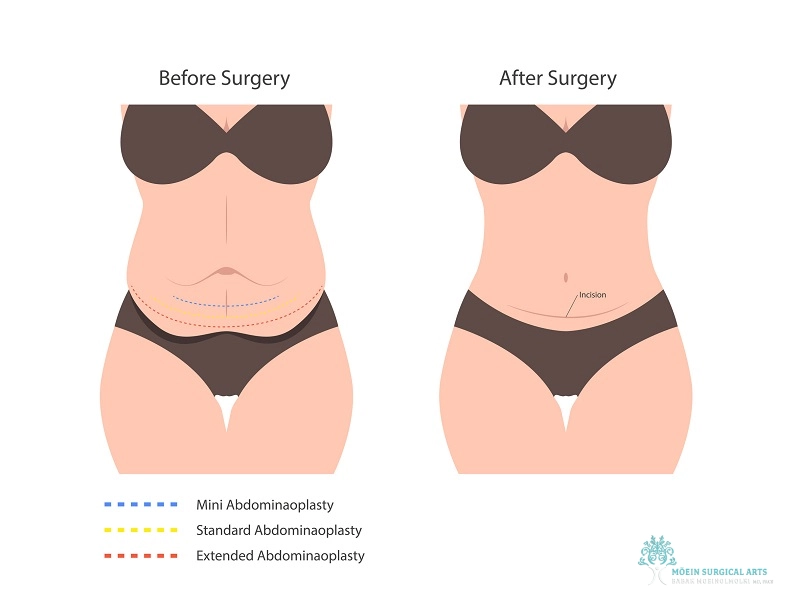
This is the most comprehensive option and the gold standard for moderate to severe diastasis recti.
During a full abdominoplasty, Dr. Moein:
- Removes excess skin and fat
- Tightens the entire abdominal wall (both upper and lower)
- Repairs the linea alba with permanent sutures
- Repositions the belly button for natural aesthetics
It’s not just cosmetic, it’s structural repair.
Patients often say they feel “stronger from the inside out” after this procedure. That’s because it restores core integrity, eliminates sagging, and improves posture and stability.
Best for:
- Postpartum women
- Individuals with major weight loss
- Patients with significant abdominal stretching
Recovery takes several weeks, but the results are life-changing, not only in how you look, but also in how you move and feel.
Laparoscopic Repair Techniques
For patients who want less invasive surgery or those who don’t have cosmetic concerns, laparoscopic repair may be an option.
What’s involved:
- Small incisions
- Use of a tiny camera and surgical tools
- Internal stitching of the separated abdominal muscles
This option has less downtime, minimal scarring, and can be combined with hernia repair if needed.
However, it may not be suitable if:
- You have excess loose skin
- You want a flatter, contoured stomach
- You need cosmetic reshaping in addition to repair
Laparoscopic surgery is typically chosen for function over form, and often covered by insurance if related to a hernia or medical necessity.
Diastasis Repair with Hernia Surgery
Diastasis recti often coexists with hernias, especially around the belly button (umbilical hernia) or along the midline (ventral hernia). Dr. Moein frequently performs combined procedures to treat both conditions in a single surgery.
How it works:
- The hernia is repaired and reinforced
- The diastasis is corrected using internal sutures
- In some cases, a surgical mesh may be placed for extra support
This dual approach:
- Reduces the need for multiple surgeries
- Speeds up total recovery
- Maximizes core strength and durability
If you’ve been told you have a hernia and diastasis, this combined treatment is often the most efficient and effective solution.
Which Option is Right for You?
Your ideal treatment depends on:
- The severity of the muscle separation
- The amount of loose skin or fat
- Whether you have a hernia
- Your aesthetic goals
- Your health status and lifestyle
That’s why every patient at Moein Surgical Arts receives a customized surgical plan.
We don’t believe in one-size-fits-all. We believe in transformational results that last.
Average Cost of Diastasis Surgery
The total cost of surgery varies depending on:
- Type of procedure (mini vs. full tummy tuck vs. laparoscopic repair)
- Whether a hernia repair is included
- Facility and anesthesia fees
- Post-surgical garments and follow-up care
On average, diastasis recti repair surgery at a private practice in Los Angeles ranges between $8,000 and $15,000.
If your surgery includes cosmetic goals like skin tightening, liposuction, or belly button repositioning, that may influence pricing.
Dr. Moein provides a custom quote during your consultation, so you know exactly what to expect based on your unique needs.
Will Insurance Cover the Procedure?
Great question, and the answer is… maybe.
Here’s the breakdown:
Insurance may cover diastasis recti repair if:
- It’s done in conjunction with a hernia repair
- The condition is causing pain, dysfunction, or bowel/bladder issues
- You have documentation from physical therapy showing non-surgical failure
Insurance won’t cover it if:
- The procedure is purely for cosmetic purposes
- You’re doing it only for abdominal appearance
- There’s no functional impairment
This is why many patients opt for combined procedures, such as hernia repair and abdominoplasty, to maximize both insurance and cosmetic benefits.
Dr. Moein and his team can assist you with:
- Pre-authorization requests
- Medical documentation
- Insurance coding for eligible portions
Still unsure? Schedule a consultation to determine what may be covered in your case.
Long-Term Expectations After Diastasis Recti Surgery
Congratulations on completing your journey through consultation, surgery, and recovery. Now it’s time to enjoy the benefits of your new body. Fixing diastasis recti is about more than just appearances; it’s about reclaiming your confidence and improving your quality of life.
Long-Term Results
Once healed, patients often report:
- A flatter, firmer abdomen
- Stronger core muscles
- Better posture and spinal alignment
- Reduced back pain and improved mobility
- Increased self-esteem
Many realize how significantly diastasis recti affected their lives only after it’s resolved, making everyday activities much easier and more enjoyable.
Post-Recovery Exercise Timeline
- Weeks 1–6: Focus on light movement and healing (walking, deep breathing)
- Weeks 6–12: Introduce gentle strength training and stretching (avoid core strain)
- After 12 Weeks: Resume full workouts, including core exercises, with Dr. Moein’s clearance.
You can engage in activities like Pilates, yoga, weightlifting, and cardio, all while enhancing your core strength thanks to restored muscle function.
Emotional and Mental Benefits
Beyond the physical, many patients experience profound emotional changes such as increased confidence, pride in their bodies, and motivation for a healthier lifestyle. This procedure serves as a mental reset, especially for new moms or those feeling disconnected from their core.
Maintaining Your Results
To maintain your improvements, consider the following:
- Stay committed to core-friendly fitness routines
- Avoid sudden weight gain
- Eat a balanced anti-inflammatory diet
- Stay hydrated and support collagen intake with Vitamin C and Zinc
- Follow post-op recovery protocols, including avoiding heavy lifting initially
Regular follow-ups with Dr. Moein can help ensure your results last a lifetime when supported by healthy habits.
Diastasis Recti Surgery Options: Consultation With Dr. Moein
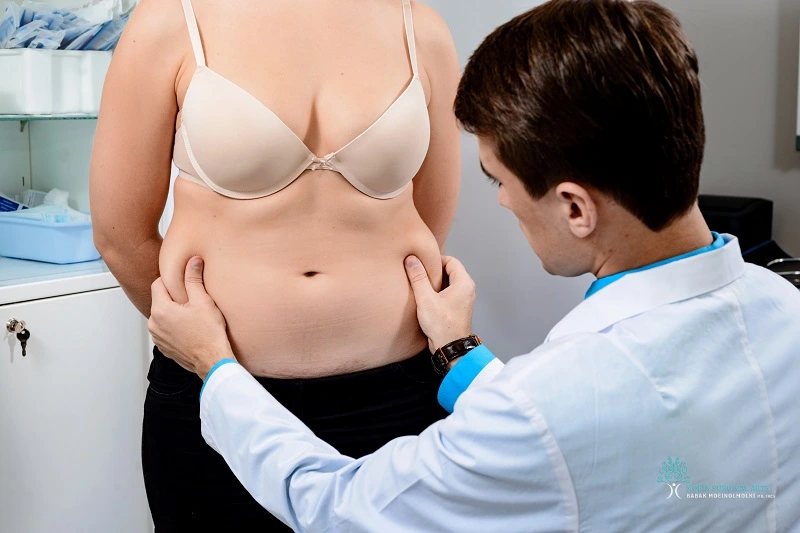
If your abdominal separation is larger than 2.5–3 finger widths, or if physical therapy hasn’t resolved symptoms like bulging, back pain, or weakness after 3–6 months, surgery may be the most effective solution. A consultation with Dr. Moein will help determine your specific needs.
Please feel free to call 310-455-8020 or fill out our secure contact form to book your consultation. During the visit, Dr. Moein will evaluate your condition, discuss your goals, and outline your personalized treatment plan.
]]>Let’s discuss abdominal etching cost and abdominal etching. This surgical body contouring procedure creates a chiseled appearance in the abdominal region. This procedure eliminates excess fat from the waistline and reveals the underlying muscles to create a six-pack-like appearance using VASER liposuction.
The surgical process involves the use of a special VASER high-definition liposuction technique. A microcannula removes excess fat from the layer closest to the ab muscles through several tiny incisions in the abdomen. At Moein Surgical Arts, we perform the procedure under general anesthesia.
Abdominal etching is highly effective in removing stubborn fat deposits from the stomach area. The relatively low-risk procedure can be outpatient, meaning patients can return home on the same day. The procedure will permanently change the abs and stomach lines.
Abdominal etching is an excellent option for individuals who have reached their ideal weight but are still struggling with stubborn abdominal fat or cannot achieve their desired six-pack appearance.
High-definition VASER liposuction is a key component of jaw-dropping ab etching. Our surgeons are trained experts in this technology.
Abdominal Etching Cost Considerations

It’s important to look beyond the aesthetic benefits when considering abdominal etching. The abdominal etching cost can vary. Financing options are available for those who need help with the abdominal etching cost. Understanding abdominal etching costs can help decide.
Average Costs of the Procedure
Before deciding to undergo abdominal etching, one of the essential factors to consider is the cost of the procedure. Knowing the abdominal etching cost can help individuals decide if it is affordable.
Several factors affect the cost of the abdominal etching procedure, including the extent of surgery required, the cosmetic surgeon’s experience and qualifications, the clinic’s location, and the liposuction technique used. The abdominal etching cost can range from $6,000 to $10,000. However, it’s important to note that these figures are estimates, and the actual cost can vary depending on several factors.
The cost of an abdominal etching procedure can vary from clinic to clinic and among different surgeons in the industry. Surgeons with excellent qualifications and extensive experience can charge higher fees. Likewise, clinics in locations with a higher cost of living can charge more for the procedure.
In conclusion, estimating the abdominal etching cost is challenging because of the factors affecting its price. Comparing different clinics and surgeons’ costs is important when considering abdominal etching. Find the one that fits your budget without sacrificing the quality of care. Set realistic expectations for the financial aspect to reduce stress and financial strain.
Six Pack Surgery Financing Options
The cost of abdominal etching surgery is a significant consideration for most patients. Health insurance does not cover cosmetic surgery, but financing options exist to help cover the cost.
Many clinics that offer abdominal etching provide financing options through third-party lenders specializing in healthcare financing. These lenders offer payment plans that may allow patients to spread out the cost of treatment over several months or years.
Some payment plans may involve no-interest financing if you pay the fees before the promotional period expires. The total abdominal etching cost will include a fixed interest rate. Understand the requirements to prevent extra expenses.
Discuss all the options available with the clinic’s patient coordinator. They can help you understand the different payment plans and financing options and which suits your financial situation best.
Preparation for Abdominal Etching Surgery
Before undergoing abdominal etching surgery, there are several important steps to prepare for the procedure. First, seek evaluation and assessment from a plastic or cosmetic surgeon. During this consultation, the surgeon will examine your abdominal muscles and skin and evaluate your medical history and current health status. At this time, discuss your desired outcomes and expectations.
Your surgeon will provide pre-surgery instructions to help you prepare for the procedure. These instructions may include dietary guidelines, restrictions on physical activity, and recommendations for lifestyle habits, like quitting smoking or reducing alcohol consumption. Following these instructions ensures the best possible results and a smooth recovery process.
Evaluation and Assessment by a Plastic or Cosmetic Surgeon

When considering an abdominal etching procedure, seek assessment from an experienced, board-certified plastic or cosmetic surgeon. This evaluation and assessment are crucial to ensure the safety and success of the procedure.
During the consultation, the surgeon will examine the patient’s medical history and current health to determine whether they are a suitable candidate for the procedure. The surgeon will also evaluate the patient’s body type, ideal weight, and natural abdominal contours to determine the extent of the surgery.
The surgeon may also use imaging technology to create a detailed surgical plan and provide the patient with a visualization of the expected results. They will discuss any potential risks or complications with the patient and explain the extent of the surgery.
Patients need to be honest about their medical history and disclose any concerns about the procedure during this evaluation. The surgeon will review the information and decide if the surgery is safe.
In summary, the evaluation process before abdominal etching surgery by a plastic or cosmetic surgeon includes a thorough evaluation of the medical history and current health status. The surgeon will also consider the patient’s body type, ideal weight, and natural abdominal contours and may use imaging technology to map out the surgical plan. This process ensures the patient’s safety and helps to set realistic expectations for the likely results of the procedure.
Conclusion: Six Pack Surgery Cost in Los Angeles
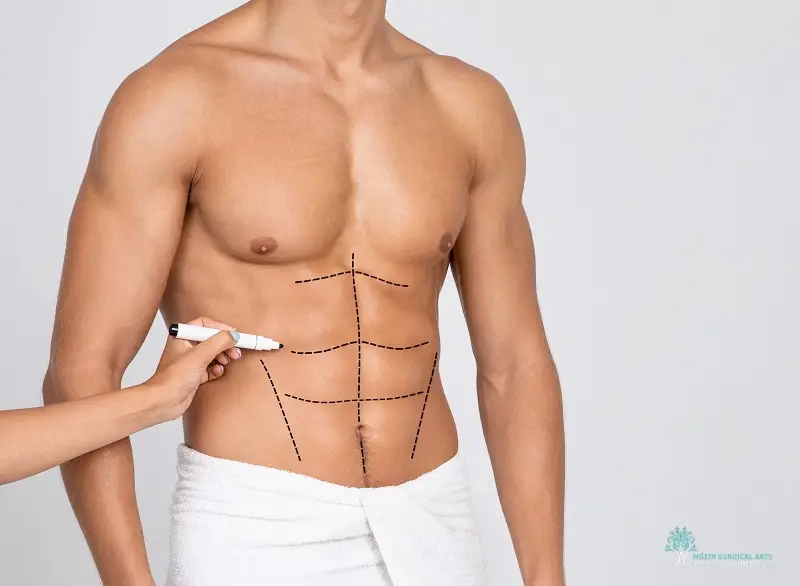
Surgery is an important decision about six pack surgery. Consult with reputable surgeons, consider the cost, risks, and benefits, and make the right decision. Price should never be the only consideration. The most expensive cosmetic surgery is often the one that requires redoing.
Please get in touch with us for your abdominal etching consultation, and we will ensure we can meet your goals. Do not hesitate to ask questions in our contact form.
Read More
A Rundown of Cosmetic Body Contouring Fees
* Illustrative images on this page are models, not actual patients. Real patient results are shown in our Before & After gallery.
]]>Are you seeking a solution to finally get that toned washboard stomach you’ve always wanted? Abdominal etching surgery is a novel cosmetic treatment that can help you achieve the six-pack abs you’ve always wanted. This body sculpting can result in more defined and sculpted abdominal muscles, increased self-confidence, and a higher quality of life.

Table of Contents
- Understanding Ab Etching
- Ab Etching Before and After
- What is Ab Etching?
- Who is a Good Candidate for Ab Etching Surgery?
- Traditional Liposuction vs. Abdominal Etching Procedure
- Male vs Female Ab Etching
- The Ab Etching Procedure and Results
- Patients With Realistic Expectations Should Only undertake Final Considerations About Abdominal Etching Surgery and Cosmetic Procedures
Ab Etching Before and After
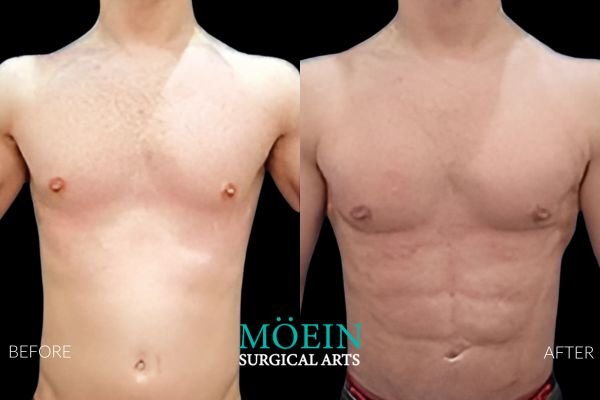
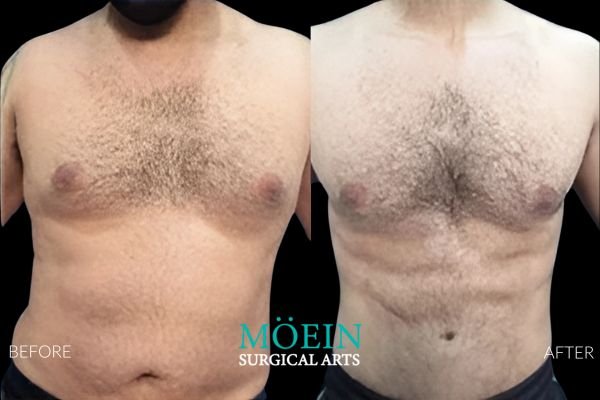
What is Ab Etching?
Ab etching is a novel cosmetic process that can assist you in attaining a more toned and contoured stomach. This body sculpting involves making small incisions in the abdominal area to remove fat and reveal underlying muscle definition. It’s also known as abdominal etching, six-pack surgery, or liposculpture. The results of ab etching can be quite dramatic; it can give you the look of having a six-pack without losing too much weight or doing hundreds of sit-ups daily.
Ab etching is a safe and effective way to contour your abdomen and get the body you want—but it’s important to remember that this procedure isn’t a replacement for healthy eating and exercise habits. If you are considering ab etching, talk with your doctor first so they can advise on how best to reach your desired goals.
Abdominal etching is a great way to get the body you’ve wanted.
Who is a Good Candidate for Ab Etching Surgery?
Who Should Consider Abdominal Etching Surgery?
Ab etching surgery is a great way to get your desired body. But who makes the ideal candidate for this cosmetic procedure? Those who have already achieved their desired weight loss and are looking to refine their abdominal shape can benefit from this type of body sculpting. Having reasonable expectations regarding your outcomes and understanding the dangers associated with any procedure is also critical.
The best candidates for ab etching are good overall health and mustn’t smoke or drink heavily before undergoing this procedure. Before choosing ab etching surgery, discuss any current medical issues with your doctor, like diabetes or heart disease.
Traditional Liposuction vs. Abdominal Etching Procedure
| Comparison Factor | Traditional Liposuction | Ab Etching (VASER) |
|---|---|---|
| Purpose | Remove excess fat & reduce volume | Sculpt & define six-pack muscles |
| Technique | Standard suction cannula | VASER ultrasound-assisted precision |
| Fat Removal | Large volume, general areas | Selective, superficial fat layer |
| Skill Level | Standard technique | Advanced artistic skill required |
| Results | Slimmer silhouette | Athletic, defined muscles (six-pack) |
| Best For | Excess fat removal | Already fit individuals wanting definition |
| Recovery | 1-2 weeks | 2-4 weeks |
| Cost Range | $3,000 – $6,000 | $4,000 – $8,000 |
Key Takeaway: Traditional liposuction is ideal for removing larger fat deposits and achieving overall slimming, while ab etching uses advanced VASER technology to create athletic, six-pack definition. Choose based on your body goals and current fitness level.
Traditional liposuction and abdominal etching are the most popular body sculpting procedures. Both techniques can help you achieve a slimmer and more toned figure, but the processes involved in each treatment differ greatly.
During the procedure, a thin tube called a cannula is inserted into the desired area through small incisions, and suction is used to remove fatty tissue. This technique can be quite effective for removing large amounts of fat quickly and effectively.
Ab etching is an advanced type of liposuction that focuses on creating more defined abdominal muscles by selectively removing fat from certain areas of the stomach region. This technique requires more skill than traditional liposuction since it uses VASER ultrasound-assisted lipo to create natural-looking muscle definition, as only this method accesses the fat layer just above the muscles. The results last longer than traditional liposuction since the surgeon only removes fat instead of muscle tissue, which can be beneficial for those who want long-lasting results without surgery again in the future.
In conclusion, VASER liposuction and abdominal etching can help you achieve your desired body shape goals. If you want a more subtle muscle definition, abdominal etching can produce highlights or high-definition results.
VASER liposuction and abdominal etching offer two unique body sculpting options to help you achieve a more toned figure. Regardless of your chosen procedure, consult an experienced surgeon who can provide the best advice and results tailored to your needs. Ready to learn more? Next, let’s explore the technique and results of traditional liposuction in greater detail!
Male vs Female Ab Etching
Ab etching is a specialized cosmetic procedure that enhances the definition of abdominal muscles through precise fat removal and sculpting techniques. This advanced form of liposuction creates more pronounced muscle definition by strategically removing fat deposits around the natural contours of the abs. While the fundamental technique remains similar, there are notable differences in how ab etching is approached for male versus female patients, reflecting the distinct aesthetic goals and anatomical considerations for each gender.
The comparison table below highlights the key differences between male and female ab etching procedures:
| Comparison Factor | Male Ab Etching | Female Ab Etching |
|---|---|---|
| Aesthetic Goals | Six-pack definition with prominent rectus abdominis, deep grooves between muscle segments | Subtle athletic lines, vertical midline definition, softer contours |
| Muscle Pattern | Enhanced 6-8 pack appearance, emphasized obliques and serratus anterior | Focus on linea alba (vertical line), gentle lateral definition |
| Fat Distribution | Target lower abdominal fat, love handles, create angular definition | Maintain feminine curves, preserve some subcutaneous fat layer |
| Sculpting Depth | Deeper etching for more dramatic shadows and definition | Superficial etching for natural, toned appearance |
| Treatment Areas | Extensive work on obliques, lower abs, and upper abs | Concentrated on central abdomen, minimal oblique work |
| Recovery Time | 4-6 weeks for full definition to appear | 3-5 weeks, typically faster due to less aggressive sculpting |
| Ideal Candidates | BMI under 30, good muscle tone, minimal visceral fat | BMI under 28, good skin elasticity, active lifestyle |
| Results Longevity | Permanent with stable weight and regular exercise | Long-lasting with maintained fitness routine and healthy diet |
| Common Combinations | Often combined with gynecomastia surgery or chest sculpting | Frequently paired with waist contouring or Brazilian butt lift |
The Ab Etching Procedure and Results
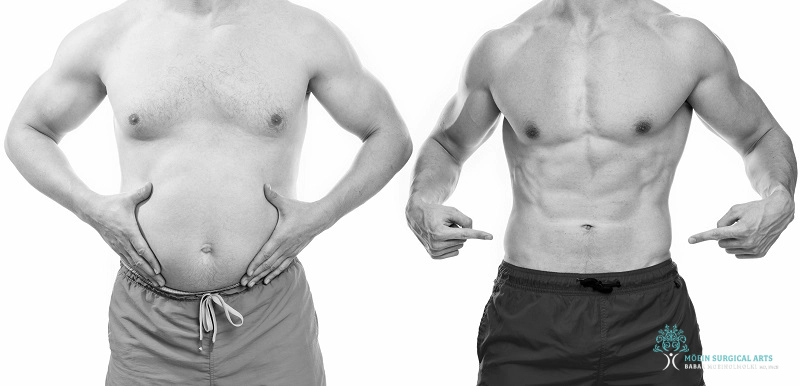
Ab etching is a specialized body contouring procedure designed to create more defined and sculpted abdominal muscles. It involves using a specially designed cannula to remove small amounts of fat from the abdomen to create the desired definition and shape. The process is typically done under general anesthesia, with minimal downtime afterward.
Although there may be some discomfort after the procedure, most patients find it relatively quick and easy to recover. Since VASER lipo does not damage connective and soft tissues, pain and bruising are minimized. The results of abdominal etching are generally seen within weeks afterward as the area becomes more toned and sculpted.
Overall, ab etching can be an effective way for individuals looking for slimmer features and more defined contours on their stomachs to do so with minimal scarring or downtime.
Improved Self-Confidence and Quality of Life
Improving your physical fitness can have a tremendous impact on your life. Not only can it help you look and feel better, but it can also boost your self-confidence and improve the quality of your life. For example, having a toned midsection, you are proud of can make you feel more comfortable in many situations, such as at the beach or when wearing tight clothes.
Exercising regularly releases endorphins which can help reduce stress and even increase happiness levels. Improved physical fitness has been associated with increased energy levels, making everyday tasks like running errands or cleaning easier. Lastly, improving fitness may improve overall health, essential for long and healthy lives. Patients having ab etching find more motivation to stick with exercise and gym activities as a rule.
Ultimately, by focusing on your physical health and well-being through proper dieting and regular exercise, you can enjoy increased self-confidence and higher quality of life!
Skin Elasticity Assessment by Experienced Surgeon
Skin elasticity assessment is an important part of the treatment plan for any cosmetic procedure. Experienced surgeons use various techniques to assess skin elasticity to ensure that the patient is a good candidate for the procedure and to help them determine what type of results can be expected from the surgery. During a skin elasticity assessment, a surgeon will palpate or pinch different areas of the skin to measure its resilience and firmness.
They may also use special tools like thermometers or biometric calipers to measure the thickness of the skin in certain areas. After assessing the patient’s skin elasticity, surgeons can decide whether to adjust their technique or make other changes for optimal results. With experienced surgeons knowledgeable about assessing skin elasticity, patients can be certain they’re receiving high-quality care and have realistic expectations about their ultimate results.
If you need a skin-tightening procedure like Renuvion or excess skin excision for optimal results, don’t shy away from your surgeon’s advice. No one likes to see rippled or droopy skin after having a cosmetic procedure.
Related Abdominal Contouring Procedures
Depending on your skin elasticity assessment and aesthetic goals, your surgeon may recommend alternative or complementary procedures: Tummy Tuck (Abdominoplasty) Ideal for patients with significant skin laxity or muscle separation who need more comprehensive abdominal reshaping before considering ab etching, and Traditional Liposuction For general fat reduction when muscle definition is not the primary goal.
Patients With Realistic Expectations Should Only undertake Final Considerations About Abdominal Etching Surgery and Cosmetic Procedures
Abdominal etching surgery is popular for those who sculpt their midsection and achieve defined, toned abs. However, patients must weigh the procedure and its potential risks before deciding whether to have it done. It’s also essential that they have realistic expectations about the outcome of the surgery so that they can be satisfied with the results.
Abdominal etching is a process that takes much less time to achieve the rock-hard abs look. It should only be part of a long-term plan to improve one’s fitness and appearance goals. Patients can expect dramatic changes in their body shape or size overnight. But, they should understand that results will take time to appear after the procedure because of healing and recovery periods.
The most successful candidates are those willing to follow pre-operative instructions, such as drinking plenty of water, eating healthy foods, and exercising regularly.
It’s important to remember that abdominal etching may not be suitable for everyone; some patients may need additional procedures, such as liposuction or fat transfer, depending on their anatomy to achieve their desired results. As with any cosmetic procedure, you must discuss your concerns with a qualified Cosmetic Surgeon so they can provide personalized care tailored to your needs.
]]>Most people would love to have a set of well-defined abs. Yet even with a strict diet and grueling exercise program, a six-pack isn’t always guaranteed. Ab etching can give you the firm, sculpted abdominal muscles you want.
What’s So Great About a Six-Pack?
Having a six-pack means that you have low levels of body fat. It’s the barometer we use as a society for prime fitness. If you have a six-pack, not only are you fit, but you are said to have the body we hold as ideal.
The level of six-pack you achieve may differ depending on your body contouring goals. Men typically want deeply defined abdominal muscles, while women tend to want a toned abdomen. Abdominal etching can help you achieve your goal, no matter how deep of a six-pack you want.
Is Abdominal Etching Near Me a Permanent Cosmetic Procedure?

Yes. Once your surgeon applies ab etching to your body, the fat cells that are extracted are gone for good. That means that you can never gain weight in that area. If you do gain weight after your abdominal etching surgery, you may gain fat in other places, and your results could become skewed. Therefore, it is important to be within 30% of your ideal weight when undergoing ab etching. You will also want to do your best to maintain your weight post-surgery to keep your results long-term.
Many people think that liposuction is the ideal option for enhancing the muscle definition of their abdomen, but liposuction cannot provide the results that abdominal etching can. Abdominal etching is a much more precise procedure that removes lines of fat in specific areas of the abdomen to sculpt the six-pack you have always wanted.
Because the procedure focuses on the fat that surrounds the abdominal muscles, it is able to provide more muscle definition enhancement compared to liposuction.
If you have struggled to drop that last layer of fat through traditional diet and exercise to no avail, abdominal etching may be for you.
How is Abdominal Etching Performed?
Abdominal etching is a type of liposuction. The procedure first gained notoriety in the 1990s. Today, both men and women choose abdominal etching to achieve their ideal bodies.
The procedure works similarly to traditional lipo but is more refined. While liposuction aims to remove large pockets of fat, ab etching allows for more detailed work.
The fat deposits that cover your ab muscles are carved off your body bit by bit. This is done by your surgeon making small incisions near your belly button. The procedure can give patients high-definition abdominal esthetics.
By applying his or her artistic touch, your surgeon can give you indentures that give the effect of six-pack abs. For women, the definition can come in the form of vertical abdominal lines. Fat deposits may also be taken from the obliques along the sides of your abdomen, which can give you a much narrower midsection, just like you see on fitness magazine covers.
In short, abdominal etching is a safe and effective procedure that can show off your hard work in the gym without cutting carbs or otherwise dieting like crazy.
Do You Feel Anything with Abdominal Etching?
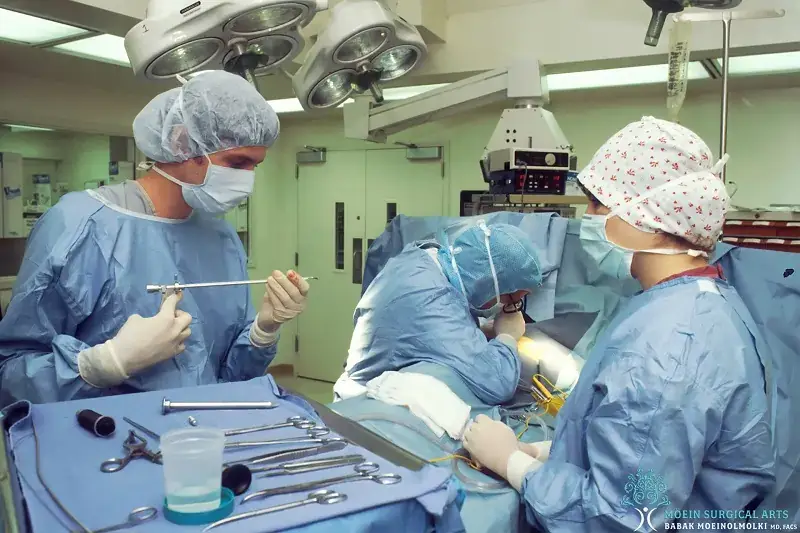
Your surgeon will prep you for surgery using markings and a foam dressing. After that, general or local anesthesia will be used, depending on your doctor’s recommendation.
The numbing agent will ensure you don’t feel anything as your doctor makes the necessary incisions. These cuts are called ports. They act as entry points for the metal liposuction cannula, your doctor’s tool to remove belly fat. The surgeon will use a pump to extract the fat deposits and fluid from the treatment area. The treatment time ranges from an hour to three hours.
Your incisions are then closed and adequately dressed. You will be asked to wear a compression garment to aid blood circulation and healing. The foam dressing that was applied prior to surgery will remain underneath the compression garment.
So, no, you shouldn’t feel any pain during the procedure.
Can Abdominal Etching Make You “Ripped?”
While the treatment area may look slightly smaller following surgery, you can’t see the true results of abdominal etching for four to six weeks. That’s the time it typically takes the average patient to fully heal.
When you are healed, you won’t believe what you see in the mirror, especially if you have spent years trying to etch out six-pack abs on your own.
Ab etching can give you the six-pack you’ve always wanted. What’s more, 98% of people are happy with their results, according to studies.
The Difference Between VASER Lipo and Abdominal Etching

VASER Hi-Definition Liposuction is another name for abdominal etching. You may also see the cosmetic procedure referred to as Liposculpture or power-assisted liposuction.
VASER stands for Vibration Amplification of Sound Energy at Resonance. The minimally invasive cosmetic procedure uses ultrasound waves to liquefy fat cells, which makes them easier to extract.
Are There Any Side Effects with VASER Hi-Def Lipo/Abdominal Etching?
The technique is low-risk and not typically associated with complications. Side effects can include swelling, fluid accumulation, bruising, and skin discoloration. You may also see pus or discharge coming from the treatment site. If the pus is green or yellowish, contact your doctor.
After a few months, you should be able to see the full results of your ab etching procedure. All side effects should have subsided, such as swelling, and your skin should begin to adhere to its new, fitter shape. This means you should be able to see your abs more visibly, giving you a toned midsection.
Are You Ready to Reveal the Muscles Underneath Your Belly Fat?
Abdominal etching can cost between $3,000 and $10,000 and is available at a cosmetic surgeon’s office near you.
If you live in Los Angeles, California, and have struggled to lose body fat, schedule a consultation at Moein Surgical Arts.
Dr. Babak Moeinolmolki (Dr. Moein for short) is a world-renowned cosmetic body contouring surgeon. Dr. Moein has a proven track record for helping patients achieve their body shape goals. Six-packs, abdominal lines, or whatever your goals happen to be – Dr. Moein can help you achieve them.
Call now to schedule a consultation at (310)694-4486.
* Illustrative images on this page are models, not actual patients. Real patient results are shown in our Before & After gallery.
]]>